
AERO Goes National
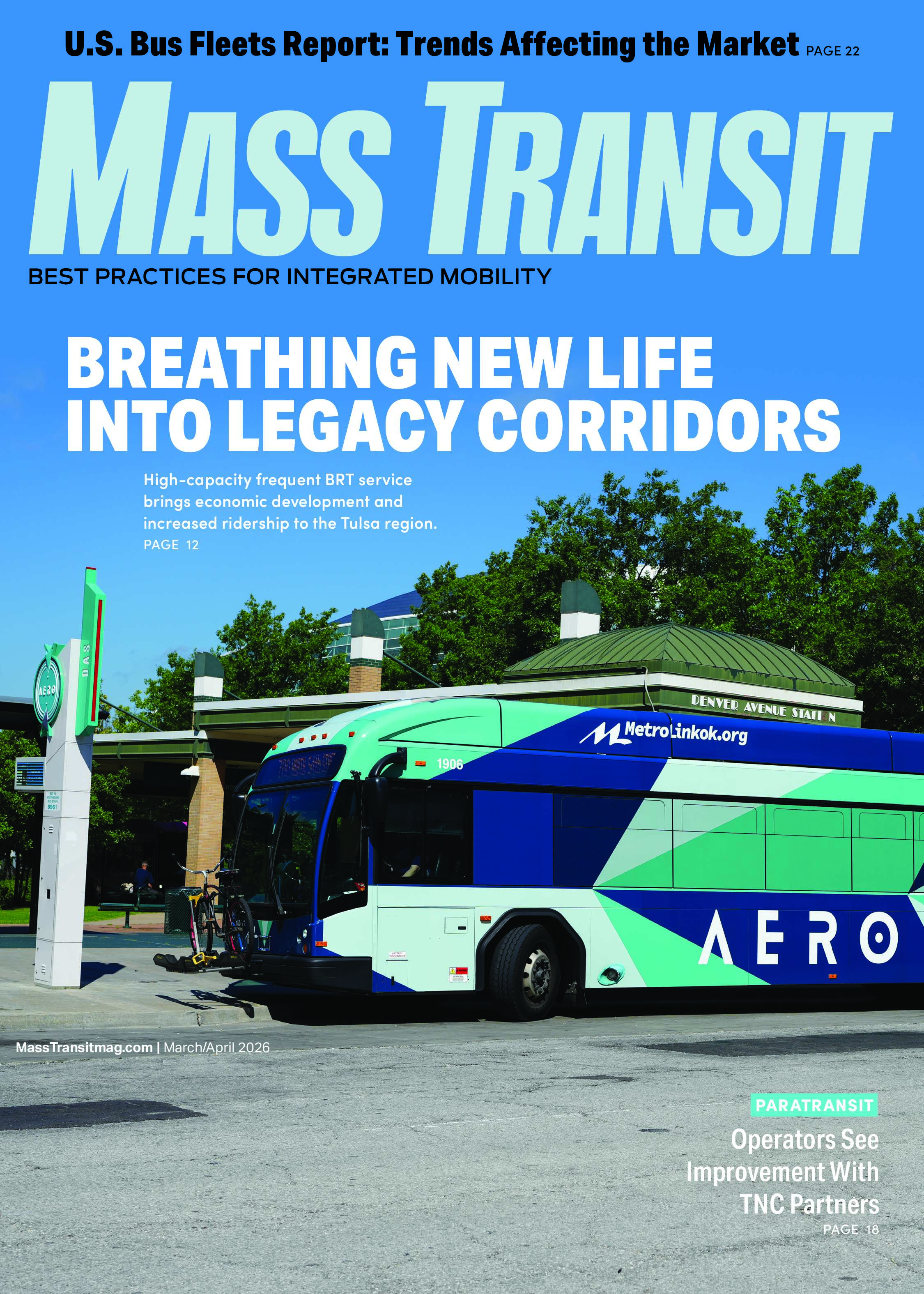
MetroLink Tulsa is featured on the cover of the March/April 2026 issue of Mass Transit magazine. Mass Transit is one of the most respected trade publications in the public transportation industry. The multi-page feature, titled "Breathing New Life Into Legacy Corridors," tells the story of how Tulsa's investment in bus rapid transit is driving real ridership growth, fueling economic development, and putting our city on the national map.
How it started:
The Aero's origins trace back to the PlaniTulsa 2010 community plan, where 79% of Tulsa residents identified new economic and job opportunities as a top priority. Peoria Avenue stood out, it was already MetroLink's highest ridership corridor, with a majority of the population living within a 10-minute walk. The city identified it as the ideal candidate for Tulsa's first bus rapid transit corridor.
Funding came through Vision Tulsa, a permanent sales tax measure passed by voters in 2016 that dedicated a portion of revenue specifically to constructing, operating, and maintaining public transit infrastructure. The proposition passed with two BRT corridors: Peoria Avenue being the first. Planning began immediately, led by the Tulsa Planning Office in partnership with the Lakota Group, who conducted a land use study to assess station areas and maximize economic opportunity for surrounding neighborhoods.
The city wanted to see Peoria really grow with the amount of economic development that they had planned and they had already constructed.
— Scott Marr, General Manager, MetroLink Tulsa
About the author
Jordan Brown